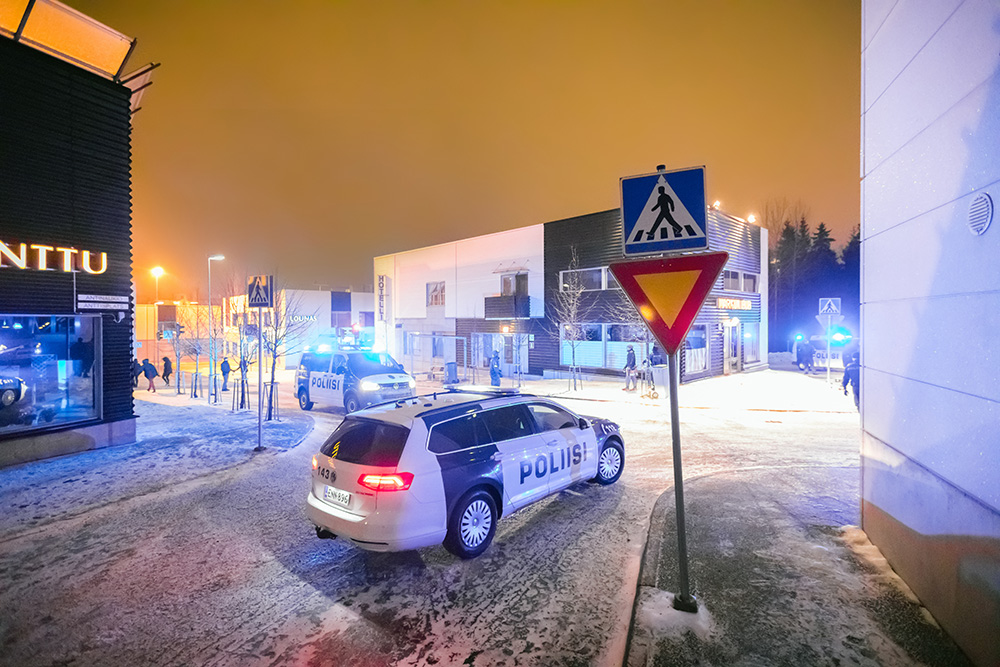
From State Police School to Police University College
Police training in Finland has been provided in different places at different times, and the training has been provided by several different parties. This exhibition describes the history of police training in Finland from the beginning of the 20th century to the present day, and how the training has ended up from Helsinki to Tampere. The adjacent display case presents the change in police aptitude and admission examinations over time.
From 19th century police training to State Police School in 1918
In the 1800s, a specific police training function took care of the instruction of new policemen in major police departments in Finland. Turku got this function in 1897, and according to the timetable, the curriculum consisted of studies in law, regulations and “corporal education”. Rural constables serving in the countryside had often only had their basic education in an itinerant school, like most Finns.
At the beginning of the 1900s, the number of policemen and volume of training were increased. Policemen in towns became state officials. Finns considered this an act of repression by Russia, under which Finland was at that time. Police Chief Karl Emil Berg in Helsinki did not want any help from the Russian Cossacks in maintaining public order, and he began to develop the police department’s own police school in 1906.
After Finland became independent, the State Police School was established on 12 August 1918. The training began in Helsinki on Fredrikinkatu street, and the first course had a total of 93 students. The School had to move as soon as the spring of 1919, as the Uusimaa Dragoon Regiment took over the buildings used by the School. New suitable premises were eventually found in the Palmstjerna fortress on Susisaari island in Suomenlinna, and the State Police School began operating there on 9 September 1919.
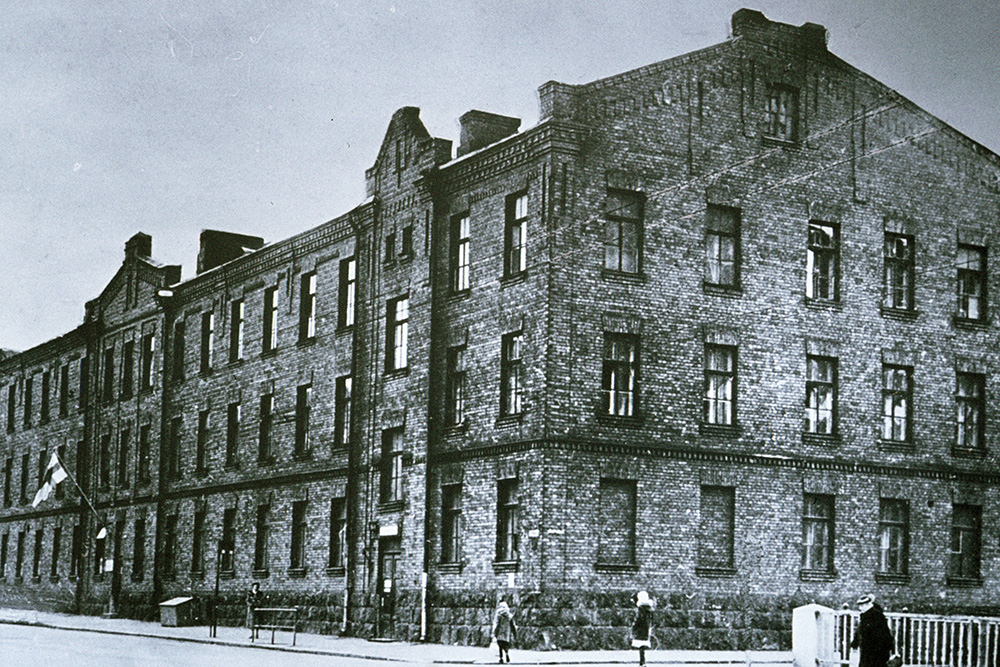
State Police School and police departments in the 1920s
Politically reliable men who could adapt to discipline were selected to study at the State Police School. The school order was adopted from the military, and the course participants had platoons with their own leaders. Sergeant major students supervised discipline. There were different courses for urban and rural constables, because the rural police were required to work independently and have a greater knowledge of the law. The first courses lasted eight weeks, and the participants committed themselves to serving as police officers for two years. By 1923, more than 1,000 men had attended the State Police School, and two courses had been held in Swedish. The School was made a permanent state institution in 1929, and senior officer training was also started there.
In the 1920s, the police departments in the largest towns also maintained and developed their own police schools. In Helsinki, the local police school was reorganised in 1920, after which the police department no longer assigned police officers to the State Police School. From 1922 onwards, police officers were also sent to Turku for training from other towns and rural areas in the Province of Turku and Pori. Moreover, police officers in Tampere were trained at the central department of the police department. However, the police training in towns did not include any formal training, but the instruction to police tasks was given through practical work.
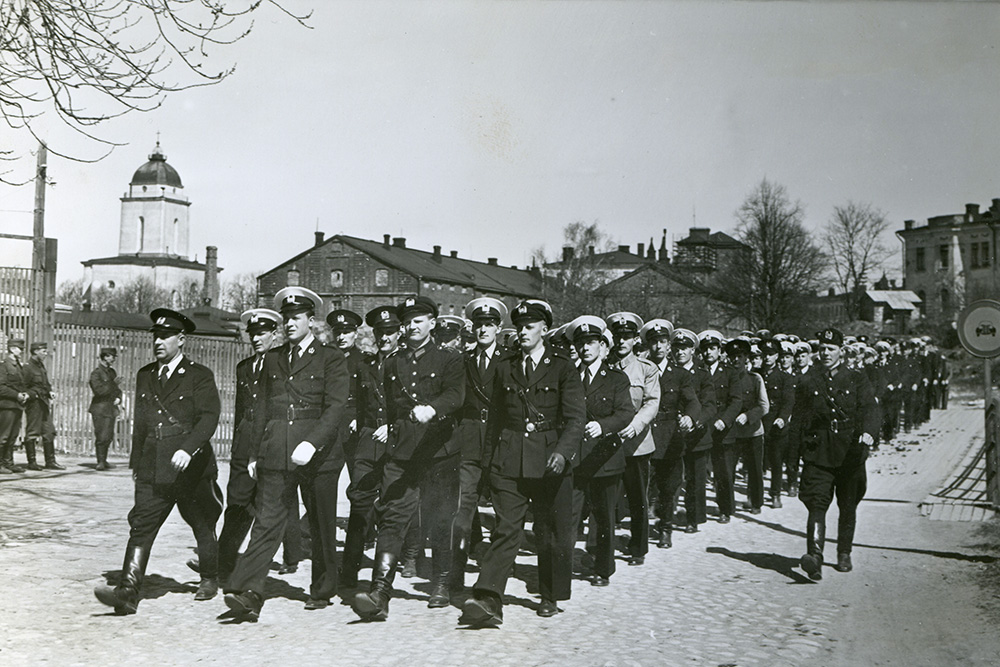
Provincial training courses and recruit training by Mobile Police Command in 1927 to 1961
Provincial training courses became a key part of police training from 1927 onwards, when police training was made a prerequisite for appointment to a permanent police position. The course which lasted about seven weeks was a requirement for the permanent position of senior constable. The course later became a precondition for admission to the State Police School. The teaching was headed by a Chief Superintendent with a Master’s degree in law or administrative science. Senior constables and sergeants were required to have completed the first class of the State Police School, and passing the second class entitled them to a lower senior officer position. The detective course qualified a police officer to become a detective.
Junior constables started working in the police departments without any specific training. Training for recruits was only offered by large police departments. There was a shortage of men in small police districts, and there was not enough time for training. In 1930, the Mobile Police Command (from 1944 the National Traffic Police) started to provide training to police recruits at the so-called police manège at address Runeberginkatu 14 in Helsinki. The Helsinki Police Department also trained its recruits there. The courses lasted two to three months. In the 1930s, most of the constable positions in the permanent police force were filled by recruits trained by the Mobile Police Command. In 1949, the National Traffic Police was given responsibility for the recruit training for the whole of Finland, and premises for this were allocated at Merimiehenkatu in Helsinki in 1954. By the beginning of the 1960s, 300 courses had been arranged for more than 8,000 recruits.
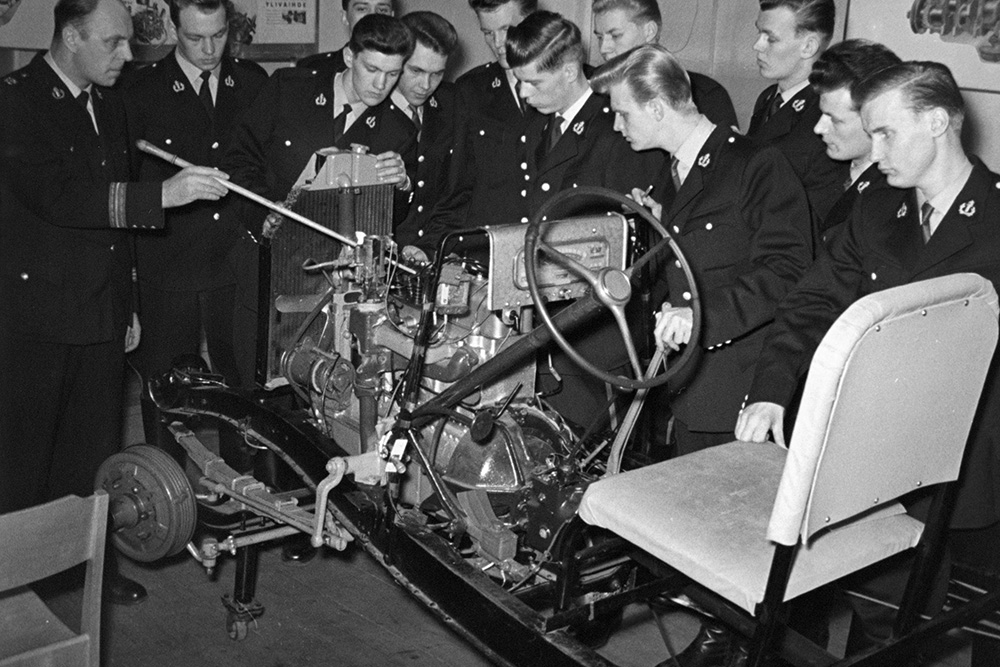
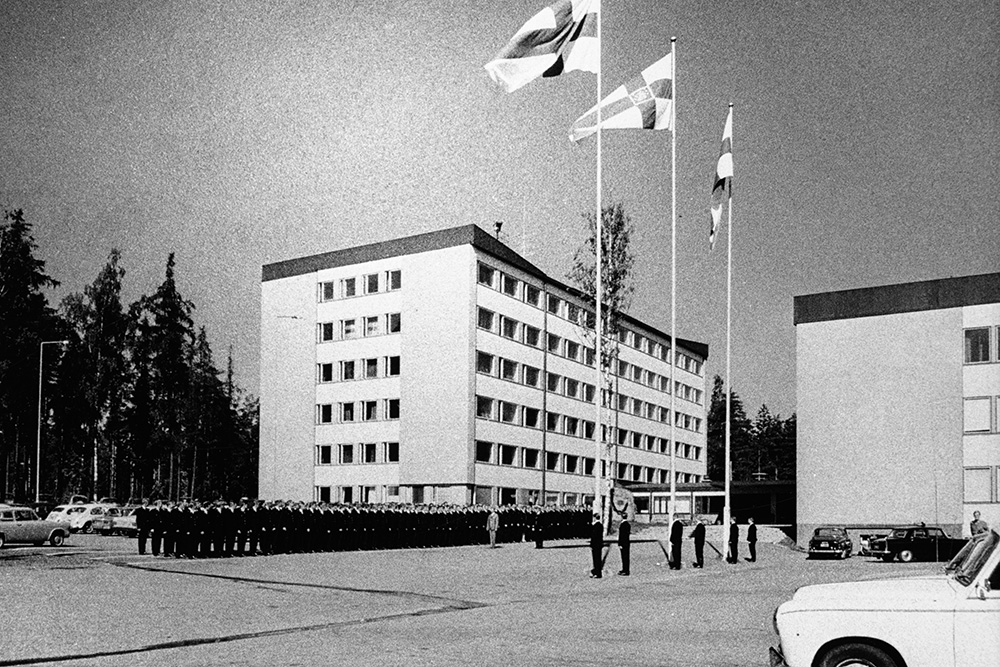
Police Academy in Otaniemi, Espoo, in 1961
The State Police School was not sufficient for higher police positions; as an example, rural police chiefs were required to have a university law degree. In the 1950s, the State Police School was criticised as being theoretical and old-fashioned and its ascetic teaching facilities were thought to be unsuitable. Police training was reorganised in 1961, and all police training was centralised to the Police Academy established in Otaniemi in Espoo, where the first police officer course started on 1 September 1961. The admission requirements became stricter, and a couple of hundred new police officers were trained every year. The Police Decree of 1969 confirmed that junior constables had to pass a candidate course at the Police Academy, and it was no longer possible to do any police work without specific training.
The Police Academy had training and teaching facilities, laboratories, a library, a reading room, an educational exhibition, a shooting range and accommodation facilities. The candidate courses were extended to five months, and crew and sergeant training to nearly six months. The Helsinki Police Department also trained constables in the 1970s, because the Police Academy was unable to provide training for a necessary number of police officers due to the insufficient facilities.
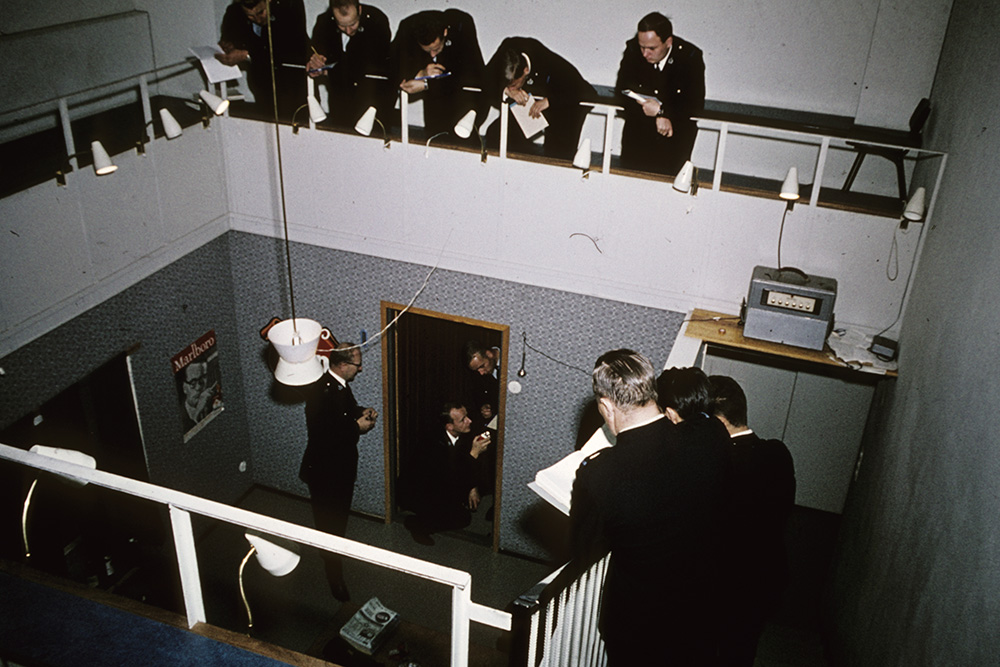
Police Course Centre in 1973 and National Police School in 1986
The Finnish society and laws changed, and the police were required to adopt a new attitude and mode of operation. A Police Course Centre was established in 1973 for candidate and police constable training under the Police Academy as a solution to the facility problems and insufficient capacity. Women were also allowed to make applications to the Course Centre. The Course Centre started in Helsinki but moved to Tampere in 1974 and soon provided training for all police constables in Finland, about 150 to 1,000 police officers a year. The candidate training took five months and the constable courses eight months. The dormitory was located in Hervanta and the teaching facilities were on Pohjolankatu in Tampere. The Police Academy continued to be responsible for organising further training and special courses as well as Swedish-language training.
The Police Course Centre became its own unit, the National Police School, in 1986, and the qualification was expanded to become a secondary qualification. The National Police School was responsible for providing basic training for the Finnish-speaking police, while the Police Academy in Espoo was responsible for the civil service qualification training of police sergeants and senior police officers, special courses for vocational further training and all training in the Swedish language. New teaching facilities were completed in Hervanta in 1993. The Police Dog Training Centre became part of the National Police School, with its premises remaining in Hämeenlinna.
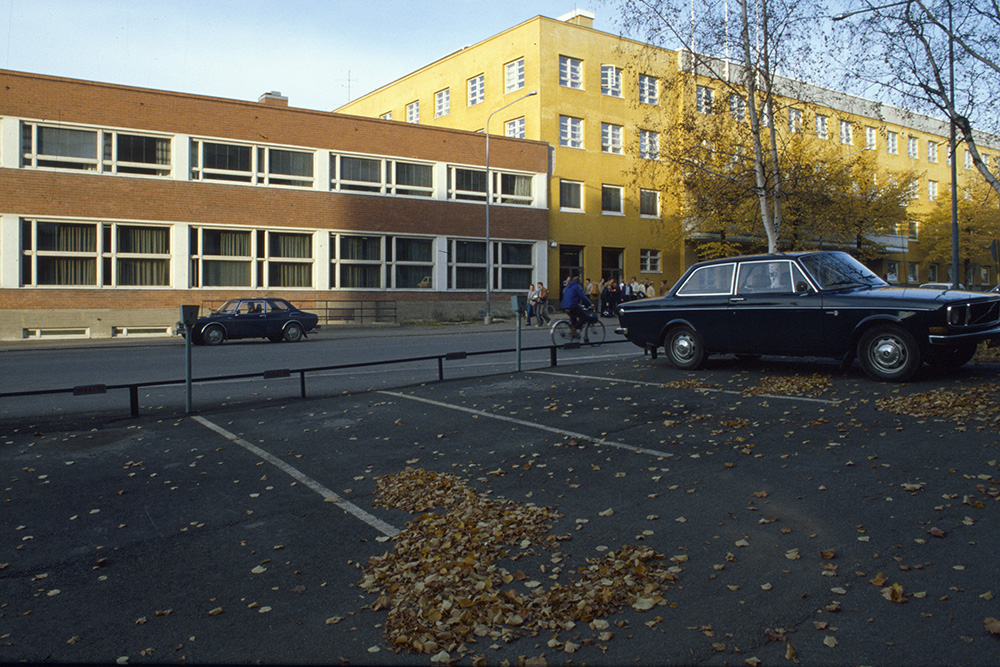
Police University College in 1998 and concentration of training in Tampere in 2008
The Police Academy became the Police University College in 1998. In 2008, the National Police School and the Police University College were merged, and at the same time the Police University College moved from Otaniemi to Tampere. Research also rose to an important position at the Police University College and a separate research unit was established there. It became the Research and Development Department on 1 January 2008. In the 2010s, the police were required to have problem-solving skills, technological know-how, an international aspect and crime prevention skills, in addition to the basic duty of maintaining order. These challenges were met by converting the three-year basic police qualification into a Bachelor’s degree, and the senior officer’s qualification was transformed into a Master’s degree in 2014.
In the 2020s, basic police training lasts three years, and the degree provides eligibility for the rank of senior constable and a qualification for rank and file positions. The basic training provides general facilities for all police work: public order and safety, traffic, permit administration and crime prevention.